m-sat 9AM - 5PM


Visible
Gas Pumps
How They Worked
In the early days of pumping gasoline, there was little trust in the quality and quantity you were getting. Automobiles, dealerships, service stations, and gas pumps all saw rapid development in the 20s-50s.
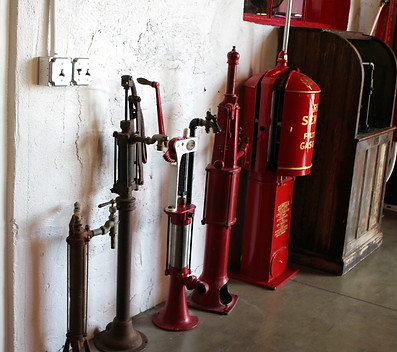
The iconic Visible Gas Pump came about to address consumer concerns. By having a clear glass cylinder with gallon markings, customers could clearly see both the quality and quantity of the gas.
LEARN MORE
Visible pumps were manually operated. There were no electric motors or computers to control the amount. The pump arm on the side would be pushed and pulled. Each stroke would draw gas up into the glass cylinder. When you pull the trigger on the nozzle to fill the vehicle, the gas flows out from gravity alone.

WALL OF PUMPS
Seen along this wall is a row of our oldest pumps. The wooden cabinet is an Original Oil dispenser from 1901. Being covered in oil most of its life the wood cabinet was protected.
As the need for precise measurement of gasoline came, so did electric pumps in 1929. Now a motor did the pumping and a dial indicated the amount. These are often referred to as "Clock Face" pumps as the dial resembles a clock.
Then shortly after in the mid 1930s computing pumps arrived. These had electric pumps to provide gas. And had complex mechanical computers that could both measure the quantity of gas, but also provide the dollar amount. These pumps went through various styling changes. Often reflecting the styling of the decade. But wouldn't truly be replaced until digital computers and card readers came onto the scene.
The majority of the pumps in this museum range from $3,000 - $10,000 depending on style and model. The older unique visibles are worth the most. The clock face pumps are in the middle. And the newer electrics are worth the least.